|
Highland
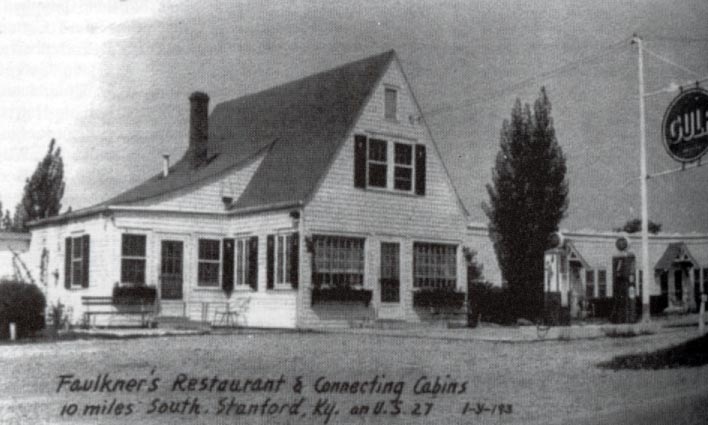
Highland was obviously named
for topographical reasons, the elevation being approximately 1400 feet,
which is about 500 feet above Main St., Stanford.
HIGHLAND GENERAL STORE
It is said that a general
store has been located at Highland since before the Civil War. Widow Laura I.
Faulkner, who came to Lincoln County from High Point, NC, established a post
office there in 1858. Mrs. Faulkner named the community after her native
Highlands of Scotland.
CIVIL WAR
The Civil War had its
devastating effects on the Highland Community as it did all over the nation. The
church was divided in its loyalty; there were two doors in the church, one for
women and the other for men. They now serve a different purpose; they became one
for the blue and the other for the gray. A partition was built down the middle
separating the hostile feelings.
Recruiters marched up and down
corduroy road with their fifes and drums “beating up volunteers”. A little “fire
water” was then passed around. Men would leave their fields and joined the cause of their
choice.
Out on the Greasy Ridge, just
over 1mile from her father, Henry Reed’s house, Rhonda Reed Butt, 15 years old, lay
in bed with  her
first child (Lucy Butt Faulkner) and wept. Her husband. John Butt, who had
moved to Lincoln from Pulaski County was over on the highway clearing up the
tract he had bought from the Transylvania Land company. her
first child (Lucy Butt Faulkner) and wept. Her husband. John Butt, who had
moved to Lincoln from Pulaski County was over on the highway clearing up the
tract he had bought from the Transylvania Land company.
She was afraid he would “join
up” and not come home at sundown. Her fears were foundless for young John
was not persuaded by impulse. He cleared his acres, set up a sawmill, built a
house and moved his family to the home and established a general store.
SAWMILL BUILT
On up the road, where Greasy
Ridge branches off from the highway, a young Mr. Cash set up a sawmill near a
sparkling spring which still bears his name.
A method for splitting timber
into thin known as “weather boarding” had been discovered. Cash owned a weather
boarding machine. On the high hill above the spring he built his house, which
was the first weather-boarded house in Highland.
Later he heard the war
drums and young Cash marched away to war. Somewhere in the south he was mortally
wounded. His comrades placed the sick man in a boat, drifted it
down Green River at night through enemy lines to returned him to his family. He died and was
buried in the old churchyard.
As the Civil War soldiers
traveled back and forth through Lincoln County, they found a grassy ridge, leading
off from Greasy Ridge, a good and safe place for grazing their horses.
Morgan’s Raiders were
everywhere, they were dedicated to steal as many horses as
possible from the enemy. This ridge became known as Horse
Ridge and it’s still known by that name today.
.MANY DIE
Smallpox took its toll of life
among both civilians and soldiers about this time. A company of Union soldiers
had one of its number come down with the dreaded disease while traveling through
Highland.
While there the company made
camp, placed the afflicted man under an overhanging rock cliff and placed a
comrade to watch over him until he died. He was buried in a shallow grave at the
top of the cliff on the Old Faulkner home place.
REED’S — YOUNG’S SETTLE HIGH-
LAND
Mrs. Elsie Faulkner wrote this
story about Highland for the Lincoln County Post. Information was gathered from
Mrs. Kelly McGuffey, Mrs. Roxie Ervin, Mrs. Serena Dye, Mrs. Shell Reed, Norman
McGuffey and Mrs. Ocela McMan.
About the year 1800, Charles
Reed and family left their home in Reedville, NC to seek a new home. Kentucky
had been a state for about eight years when the tall, red haired Reeds
(originally from Scotland) moved to the Highland Section of Lincoln County.
When the War of 1812 broke
out, Charles Reed met his old friend, Andrew Jackson, also of North Carolina, at
Jellico, TN. He went with Jackson, then known as rough and ready fighting man
from Tennessee.
Jackson led an army that he
said, “Could lick their weight in wildcats”. His men agreed with him and proved
him right. The British were badly defeated.
The young hero returned home
but was killed when his horse fell over a bluff. His son, Henry Reed, was left
to carry on the family name and traditions.
Henry’s oldest child was a
girl, Rhoda Ann, who married John Butt. Her surviving grand children in Lincoln
County are Roberta McGuffey, Clarence Burton, Mrs. Daley Reed and Violet James.
Surviving great-grandchildren are Sally Faulkner McGuffey, Norman and Billie Joe
McGuffey, Berdine Reed, Dave War ren and Russel Burton. Henry Reed had a son,
Dave, father of Shell, Jim and John Reed. Great- grandchildren of Henry in
Lincoln County are Daley, Walter, Charles and Cecil Reed (Shell’s children), the
Rev. Fonzo Reed and Mrs. Cecil Jenkins (children of Jim Reed) and Chester, Ralph
and Helen Jenkins (children of John Reed).
A son by a second marriage,
William Reed, was the father of the late Mayor George T. Reed of Stanford, a
daughter, Mrs. Sallie Warfield, a grandson Gene Reed (son of Lon Reed) and a
great-granddaughter, Allene Burton (daughter of Eldie Reed).
Henry’s son, John, is the
grandfather of Less Reed. Other sons of his first marriage were Joe and Sam Reed
who moved to Texas, a daughter, Emily who moved to Oklahoma; Susan Terry, who
moved to Virginia and Jane Mason. It was William who continued to live on at the
old home place on Greasy Ridge. His son, Lon, lived there until his death and
after that his wife continued to reside there.
YOUNG FAMILY
Another of the pioneer
families who were among the first settlers of Highland was the Youngs. There
were two different Young families. One family was no doubt descendants of the
Brighman Young, who pushed his way west ward in search of religious freedom. The
other was Nelson H. Young, father of Henderson Young, who did much to establish
Methodism in the Highland Community.
The oldest recorded documents
found of the Young family is the Bible of Nelson Harrison Young, grandfather of
Mrs. Kelly McGuffey and the late Cyrus M. Young.
Records tell us that the
Highland Methodist Church was established in 1849 on a high knoll just east of
the “old corduroy road” which later became a pike and is now the old U.S. 27
high way.
The oldest graves in the
cemetery, which grew up around the church, are dated 1862- 1864. Deaths that
occurred between the organizing of the church and this date were probably buried
in family plots or in the old Judy Bastin graveyard about a mile from there.
SCHOOL BUILT
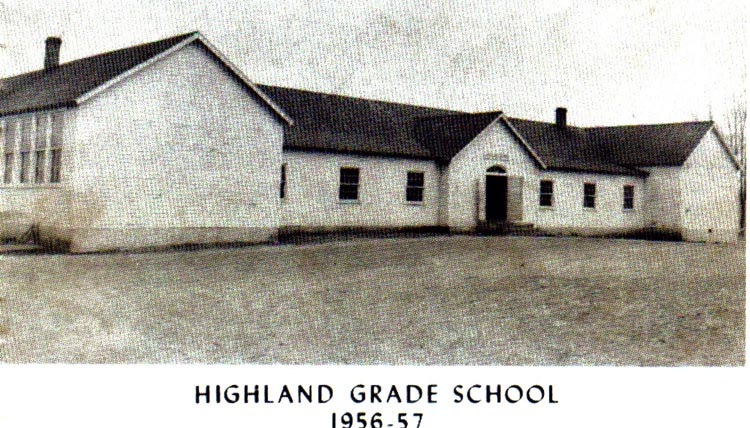
A one-room school was
established near the church in district known as Number 52. A record dated April
15,1891, shows that “the county superintendent of common school of Lincoln
County has ordered the trustees of white school district No. 52 to pay the debt
on the school house in said district and to finish and seat the same.”
“Therefore in order to
faithfully carry out the provisions of said orders, we, the trustees of said
District No. 52, levy and order the collection of a poll tax of 50 cents on each
white male citizen in said district over 21 year s old, for a year, or a period
of two years. s old, for a year, or a period
of two years.
“Also a property tax of 25
cents on each $100 worth of taxable property in said district for a year, for a
period of two years. The said tax to be collected by the Sheriff of Lincoln
County as other taxes are and paid over to the county superintendent.” E. R.
Austin, H.P. Young, charter trustees, gave the order under our hands on April
15, 1891.
The record also shows that on
July 16, 1888, “School began with C. M. Young as teacher, holding a second class
certificate, general average 83.9 percent. There was a vacation from Oct. 25
through Nov. 7 on account of the illness of the teacher. Thanksgiving Day, Nov.
29 was observed as a holiday.
“School closed on December 21,
the teacher having taught 94 days and attended the Institute five days.
“Thirty cents was received from the patrons of the school with which a broom and
dipper were purchased.
“H. F. Horton and D. W.
Jenkins, trustees, were at the school house three times.”
C. M. Young became one of the
community’s foremost teacher, he often taught school five days a week, built
the fires at the church, rang the church bell, played the church organ, led the
singing offered prayer, taught a Sunday school class and sometimes preached.
|